
Music
PURPOSE OF THE PROJECT
So far I’ve lived an unbelievably charmed life. I’ve traveled a lot. I’ve learned a lot. With a bit of this knowledge and an innate understanding of a broad spectrum of patterns I started to notice some things.
I’ve noticed naturally and through study that repetitive patterns make people move. A very basic cyclical beat charges something inside people and invokes the feeling to move.
It, in turn, raises our physical internal heartbeat. Beats move people. On a primal level. Indigenous peoples from everywhere on Earth have beat-centered music.
It is my understanding that these practices have been a useful guide to improving their desires through a trance-like state of concentration.
I imagine that early cave drawings were a part of the procedure, and beating rhythms focused the concentration towards manifesting into reality what the images depicted.
Akin to the ceremonial dress and the practiced rain dances that all indigenous people have done throughout human history.
It is so beautiful to watch. I know personally that seeing these traditions makes me feel like it is inside all of us.
It’s as if we know the sounds already and we know the beats and we know the dance choreography. Like it is a natural part of us. Deeply ingrained in us all.
I was attracted naturally to music and sound from a young age. Fortunately for me I had a nurturing involvement that protected that fascination in me.
As a student of learning and learning how to learn and how to develop retention of information through repetition and a few other methods, it all kind of fits together like a puzzle.
Sometimes putting a puzzle together is as easy as a connect-the-dot image.
I’ve been very lucky to have a wide variety of interests. I learned at a very young age that boredom is absence of concentration and thought.
Sometimes it’s overly easy to visualize objects and disassemble them, look at all the components and reassemble them. Sometimes you have to see them in your head if the objects are not in front of you.
This practice, mentally, has such great benefits when I plan to take on any endeavor.
Visualizing and feeling, in how I think, are parallel to each other.
I am a student of Music.
I am a student of Physics.
I am a student of Philosophy.
I am a student of Hunting.
I am a student of Cooking.
I am a student of Meditation.
I am a student of Observation and many other things.
One of the most important lessons of learning is the ability to shift or bridge discipline from one focused practice into another completely different one.
The patterns and behaviors of course need to be amended to cross over from one thing to another but over time it becomes second nature.
The more you do something the easier it becomes. Like digging holes for instance.
The first time you dig a proper hole you get achy and sweaty and you get blisters and muscle spasms. But the more holes you dig you adapt to the process. You become proficient and over time the hundredth hole you dig is certainly effortless.
Keeping up with it is physically demanding, but sculpting yourself mentally first, makes the job always seem vital in order to do it the best way you can physically.
Ya know - practice makes perfect.
Or as close to perfect as acceptable and correct can be.
But what is correct?
How can two people who don’t know each other produce the same effective result when doing relatively the same task?
This makes me admire the natural ability of aboriginal people who for generations have cultivated and perfected their ceremonial rituals and practices. The root of their success stems from the desires they had to ensure their survival. The magik they use is integrated from need, desire, hunger, thirst, balance and the preservation of the process.
Through time it seems that these patterns of cultural connectivity have been dispersed and simplified as civilizations grew.
Now we have Amazon Prime and not primal Amazonians.
But they survive in the aether. All of the movements and beats exist. They are easy to channel when you practice channeling.
So for years I spent hours a day playing my instruments. Learning chords and scales and rhythms. It became a common ritual to create sounds that would impress fellow musicians. At least for me. I always liked to look in the wings when I would play live to see the facial expressions of fellow musicians. People who knew the instruments in their own way and were capable of understanding the arrangements.
Seeing the response of people reacting to the music I wrote is a sacred way to share the toils of compositions that would elate and inspire my ilk.
At that time it was the objective to write some completely ridiculous music that sounded impossible. It was crystalline and precisely executed to set the bar of musicianship and know it so thoroughly that performing it was effortless and so that allowed me to move my body in ways that didn’t seem possible to align the music and performance.
It was the real magik.
The locking in with band mates that were finely tuned to the music.
I find a lot of obscure music from musicians that are writing from emotion, are working together for the ensembles, and executing the music within this rare space that differs from pop music and its compromised ethical principles of musicianship.
More times than not people start playing music to emulate something that attracted their attention.
That’s why a lot of bands sound the same. And when I say “sound the same,” I mean exactly that.
We have genre-listic systems that snuff out individual voices, individual sounds.
It reminds me of the quote from Pablo Picasso: "It took me four years to paint like Raphael, but a lifetime to paint like a child."
I take from that the understanding of a master of his craft.
I firmly believe that I am an individual and the art I create is unique to me. I have the tools that define me for how I use them.
Just because someone uses paint by numbers to make a picture doesn’t mean that they don’t have the capability to create their own paintings.
I believe that Art, true Art in spirit, has multidisciplinary aspects for achieving something completely unique to the creator.
I’ve always believed that to truly create something credible to the world of true Art I needed to create something brand new and individualized. Something that was all my own.
When I paint and when I compose music I cross disciplinary paths. It is no different than digging a really good hole.
I have familiarized myself with the shovel, and the motions, and the dirt, and its execution is as important as the outcome.
It is a meditative process. There are many types of meditation that have many different benefits and outcomes.
Deciding on what it is for is as important to the outcome as learning the different techniques to achieve the desired results.
Picking the right tool for the job.
Can I paint a picture with a hammer?
Well, of course I can.
I know how to use a hammer. I know how to paint. But I also know how to make a functional hammer. And I know how to make my own paint. I’ve been studying color theory for my whole life but the last twenty-plus years I’ve been studiously focused on color theory.
When I was young I was obsessed with becoming an amazing bass player. I didn’t grow up with the internet or YouTube and if I had, I am convinced I would have become King of Earth a long time ago.
In my youth, I relied on listening to a wide variety of music and sounds in general. The sounds of nature will teach you more than your mind will allow you to absorb. I had to read notation and play by ear to work out certain scales and how to utilize them correctly. Thinking back to those times I’m glad I learned the way I learned and had been shown the way I was shown. That is what developed me into me.
I always liked the sound of waltzes. Not necessarily for the music but the timing was always intriguing to me. There are certain types of music I cannot stand to listen to and there are certain people I cannot stand to listen to. Like when you put a tuning fork on a fractured bone and the resonance rattles through the fracture and causes pain. There are sounds, songs and musical voices that literally cause me pain and discomfort.
I am not a fan of cheaply crafted hooks. Mainly because I know how hypnosis works and the bastardized nature of a lot of music relies on these unscrupulous practices in order to make the big bucks.
Because they create this type of content and market it to people who aren’t musicians and it grew into a monster of nothing more than a realistic understanding of what it is. And what it is, is non-existence of originality, voice, talent, ability, mastership or solid soulful value. But it has a hypnotic beat and a hypnotic effect that makes people easily manipulated.
You could take a poll, double-blind study and ask proper musicians what musicians they prefer and ask some dumb-dumb who isn’t a musician what music they like and I’m willing to bet that the paths of their answers would never cross.
We have a culture of people judging things, blind to their hypnotic state, on things that they don’t actually do.
If you ask a carpenter what materials he prefers to use, he will tell you exactly what he prefers because he knows the tools and materials.
If you ask someone who is good at listening to music but isn’t a musician, what is good to them, they will give you a completely different answer then an accomplished musician would give.
How could they have an expert opinion of something they can't do or haven’t devoted their lives and discipline to?
How can an Art critic who doesn’t create Art decide what is brilliant when they haven’t created something brilliant?
Like food critics who aren’t chefs, judging chefs' food because they have a job where eating is the criteria.
Being a technically proficient musician I can tell you that for years of my life I was so critical of my own music that I scrapped more music that I have written than the music I decided to keep.
That is a pseudo-nature balanced against how polished music has become and how far from the source it is.
It’s like timing and math.
In math, we have fractions and decimals. Fractions and decimals both show numbers that are not whole, but they write them using entirely different systems.
The difference is that fractions express a number as a ratio of two distinct whole numbers, numerators and denominators.
Decimals express a number using place value based on powers of ten.
In music we have a bland maths system. We have counting for tempo and counting for measure of a repeated interval. In timing we have common time, waltz time and march time.
If we can count fantastical equations for physics then why is our music so condensed to certain formulas?
Besides the hypnotic ear-worms and jingles designed like the food pyramid “for health” and the industrial-day programming school schedule. Why is it that genres polish the same formula over and over and over and grip the minds of people who are captivated by the same thing in a different wrapper.
It’s the brand new original formula after all.
It’s comical. But it is disgusting at the same time.
The cadence is the activation of the attention span.
The precise timing of the beat controls the emotional mind. It’s got a beat and you can dance to it.
Flawlessly executing a 4/4 song at a moderate tempo with three chords and a standard formula, is nothing more than paint-by-numbers.
Throw in an annoying hook to stick in the mind of the listener and you’ve got yourself a legendary musician.
Where is the challenge?
Where is the nuance?
Where is the capacity for something that is linear?
Or a variety of notes in different order the second time around? Where is the pulse that speeds up and slows down?
Where is the human element of imperfection?
Everything is digital or digitally generated now. Frequencies recorded in digital waveforms are different than analog waveforms. They have a different effect on the brain. They have different effects on a cellular level.
Relying on digital construction of music only removes the human element.
Upon writing and recording both albums, I made a decision to not rely on overly analytical concepts like concentration and overdubbing flaws and keeping everything boxed into a state of absolute clarity and perfect metronomic quality.
I am not a robot.
I am a human being.
If I made a mistake I left it in.
It’s the least I could do as a human.
As we enter deeper into the world of AI and computerized entertainment I feel it is vital to be raw, real, and emotional in my playing.
Is there an algorithm to my music?
I don’t know, probably, but it isn’t something easily rendered by a computer programmed to make perfectly quantized sounds.
Maybe one day AI will be able to make music with emotional characteristics and imperfections of a flesh and blood being actually playing an instrument with an ebb and flow that comes from an artistic place beyond words that make sense to mortal ears. By the time that happens will it even be AI anymore?
Until then, I hope my contribution to Art and Music will scratch that itchy brain that is open to something different than what was provided to you by the status quo machine.
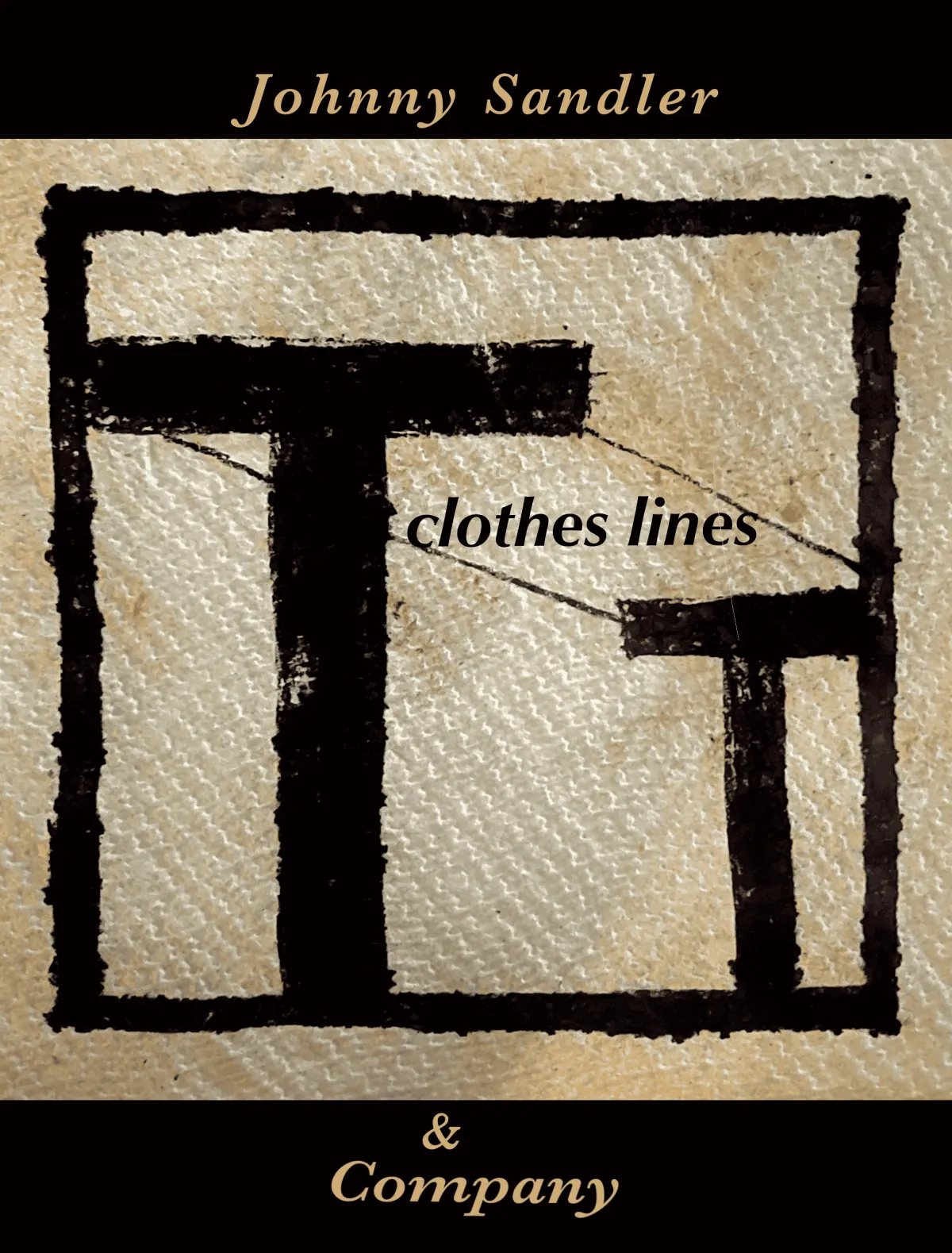
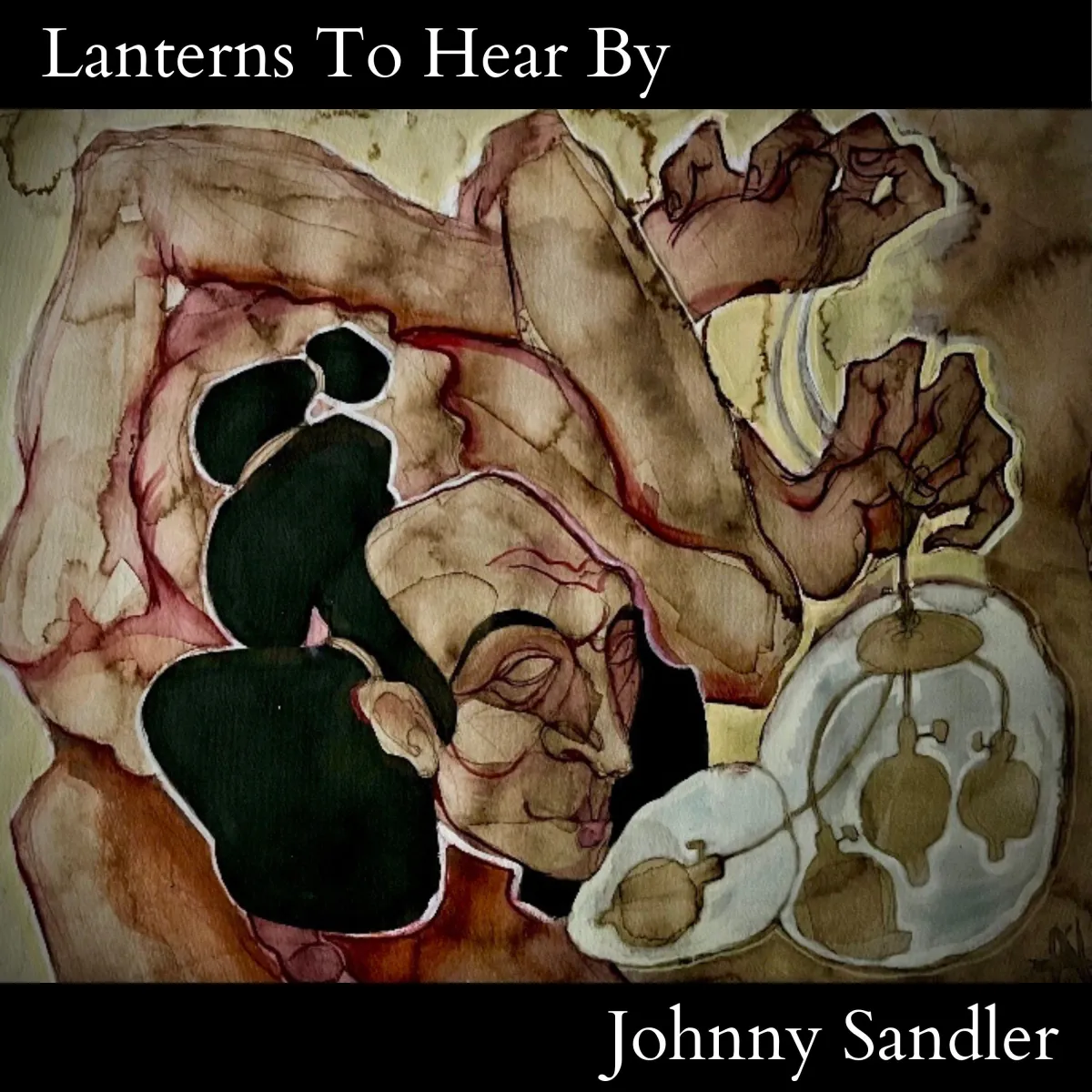
If you lay down and listen to both Lanterns To Hear By and Clothes Lines, you might get transported to a special place.
A place that is in all of us living humans.
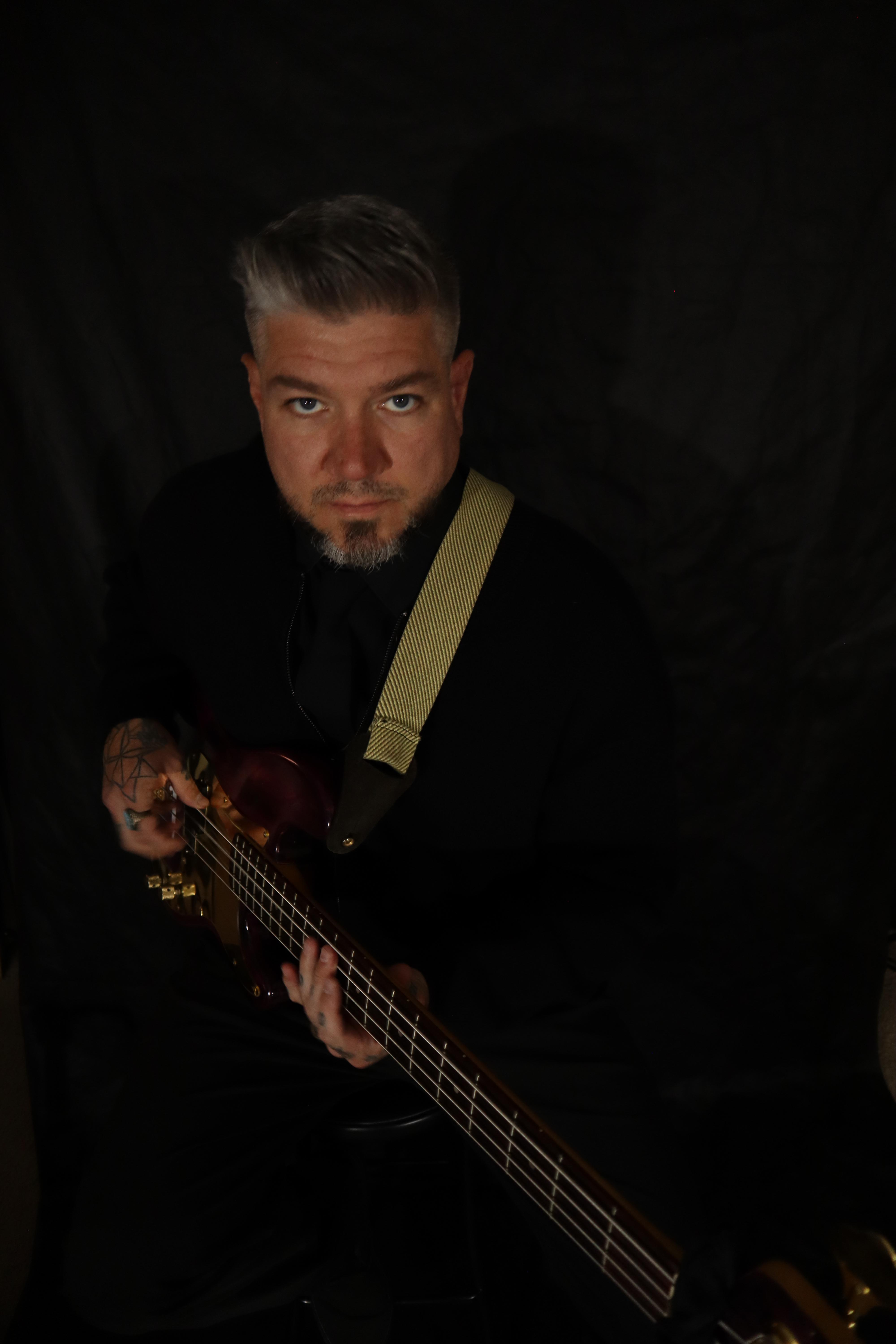
A place that I will guide you through with my bass playing, my compositions and my alternative to alternative music.
The goal was to invoke brain phases and raw animal wordless thoughts.
An escape from reality.
A sneak peek into the caves before cavemen painted them,
A blank canvas for your mind to experience what it is like to listen with your nervous system and feel what I felt when I wrote the music and where my mind is when I play these songs.
As far as bass being the underlying glue in standardized music, tying the drums to the guitars and minimizing it as a background sound, I bring it forward in a way that makes sense to me.
Melodic, harmonic, and rhythmic, I set the tone relying on a stand-alone soloist frame.
A lot of bass players across genres try to emulate certain bass players who stood out and provided an individual voice of the instrument.
While playing other people's music as a learning practice can be good for individual growth, I feel that should be the extent of it.
The majority of jazz and fusion bassists try to sound like Jaco.
Funk players try to sound like Larry Graham and Bootsy.
Down to the tone, gear, and actual instrument, they strive to replicate the sound.
That, to me, is like learning to paint and only painting replicas.
So many musicians do this and it is aggravating as a music lover with a desire to hear individuality in song.
It’s so much of the same.
So I got to work. I set a goal to create my own individual songs, formulas, timings, techniques and sounds. Digging into emotional states and expressions. Unpolished and raw with wiggle room to augment them in a live setting
Stay Connected
Be the first to hear about new music, upcoming performances, artwork releases, and stories from the studio.
By opting in, you agree to receive email communications from Johnny Sandler. You may unsubscribe at any time.

Instagram
Youtube